Who We Are
SMAM / SJS Organic Farm - Center for Excellence
The SJS Organic Farm was established under the Society of Mangalore Africa Mission (SMAM) Trust, operating under the aegis of the Catholic Diocese of Same. SMAM's mandate covers four key areas: pastoral-spiritual, education, healthcare, and socio-economic development. In the field of education, SMAM manages the St. Joseph Boys' Science Secondary School, conducts holiday tuition classes for local students, and offers scholarship programs. The organization also founded the RUPERT Children’s Home, providing a supportive environment for students from distant areas. In healthcare, SMAM is dedicated to enhancing community health services. On the socio-economic front, its initiatives include cooperative savings programs, solar light distribution, and housing projects for the underprivileged.
To further empower the local community, SMAM launched the St. Joseph Sustainable Organic Farm to train farmers and youth in organic farming and rural technologies. It is from this foundation that the SJS Organic Farm was born.
VISION
Building a Happy and Peaceful Society
MISSION
Holistic Empowerment of Youth, Women & Farmers for Food Security. And to Eradicate Abject Poverty
MOTTO
Inspire - Educate -Innovate - Celebrate
Institutional Framework
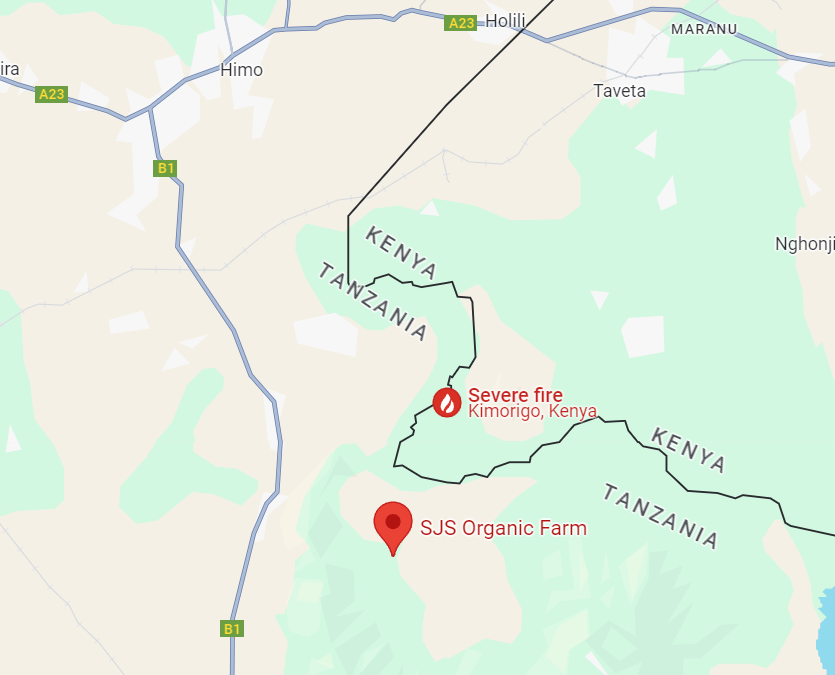
Registered in 2013, the Society of Mangalore Africa Mission (SMAM) is a faith-based charitable trust operating in Tanzania. As part of its commitment to the region, the Mission acquired 50 acres of farmland in Kwanyange Village, situated under the Kifaru Parish of the Catholic Diocese of Same. This land is specifically dedicated to advancing the Mission’s broader socio-economic and ecological vision, serving as a cornerstone for its developmental and environmental initiatives.
Innovations and Practices
The Mission employs a comprehensive approach to sustainable agriculture by integrating Effective Microorganisms (EM) and Indigenous Microorganisms (IMO) technologies with robust soil nutrient management. Their operations include the production of a diverse range of organic farm inputs, featuring over 15 varieties of composts and manures, alongside a sophisticated integrated pest management system that utilizes 15 different botanical and biological products. By applying practical rural technologies to safeguard the environment, the Mission maintains a strong alignment with the Laudato Si’ ecological framework, ensuring that all agricultural practices remain spiritually grounded and environmentally regenerative.
Core Goals
The Mission is dedicated to empowering local producers and revitalizing the ecosystem through several key objectives. By focusing on sustainable practices, they aim to significantly reduce farm input costs for smallholder farmers while ensuring the production of poison-free, chemical-free food for the community. Central to this mission is the commitment to restore environment and soil health, reversing degradation through natural intervention. These goals are realized by building resilient communities through three scalable and interconnected models: the Eco-farm, the Eco-parish, and the Eco-village, each serving as a blueprint for holistic living and environmental stewardship.
GOAL
Use of Indigenous Low Cost Rural Technology with Scientific Temper to Mitigate the Climate Change Effects on Agriculture and Livestock. Development for a Decent Living.
STRATEGY
Develop qualified organic farm facilitators as Agroecology Extension Officers to spread sustainable, poison-free farming
Guiding Light : Laudato Si’
Pope Francis’ encyclical on the care of our common home.
OUR APPROACH
1. Right Based: Enlightening people about their rights and duties and to collectively claim them
2. Cost effective: Utilizing of organizational & Natural resources
3. Result Based: Ensure desired results by keeping focus always on result across functioning.
4. Gender Sensitive: Cross cutting agenda starting from staffing, infrastructure, human resources systems and program
5. Safeguarding the Environment: Being sensitive towards nature and environment issues.
5. Partnership cantered: Involving stakeholders in their own integrated and treat them as partners in the course of development.

OBJECTIVES
1. To learn, train & implement Ecological – Sustainable - Organic Agricultural practices.
2. To educate in EM [Effective Microorganisms] Technology & Rural Technology.
3. To achieve Food Security through production of quality cereal crops and livestock.
4. To empower farmers, women, girls, youth and enhance gender equality.
5. To develop farmers cooperatives.
6. To achieve Socio-economic development, employment generation through green economy.
7. Improve the water quality for Human Consumption, Livestock and Irrigation.
8. Developing SACCOS (Savings and Credit Cooperative Society).
9. Develop and Promote Agri-Tourism.
10. Develop clean energy resources for electricity generation.